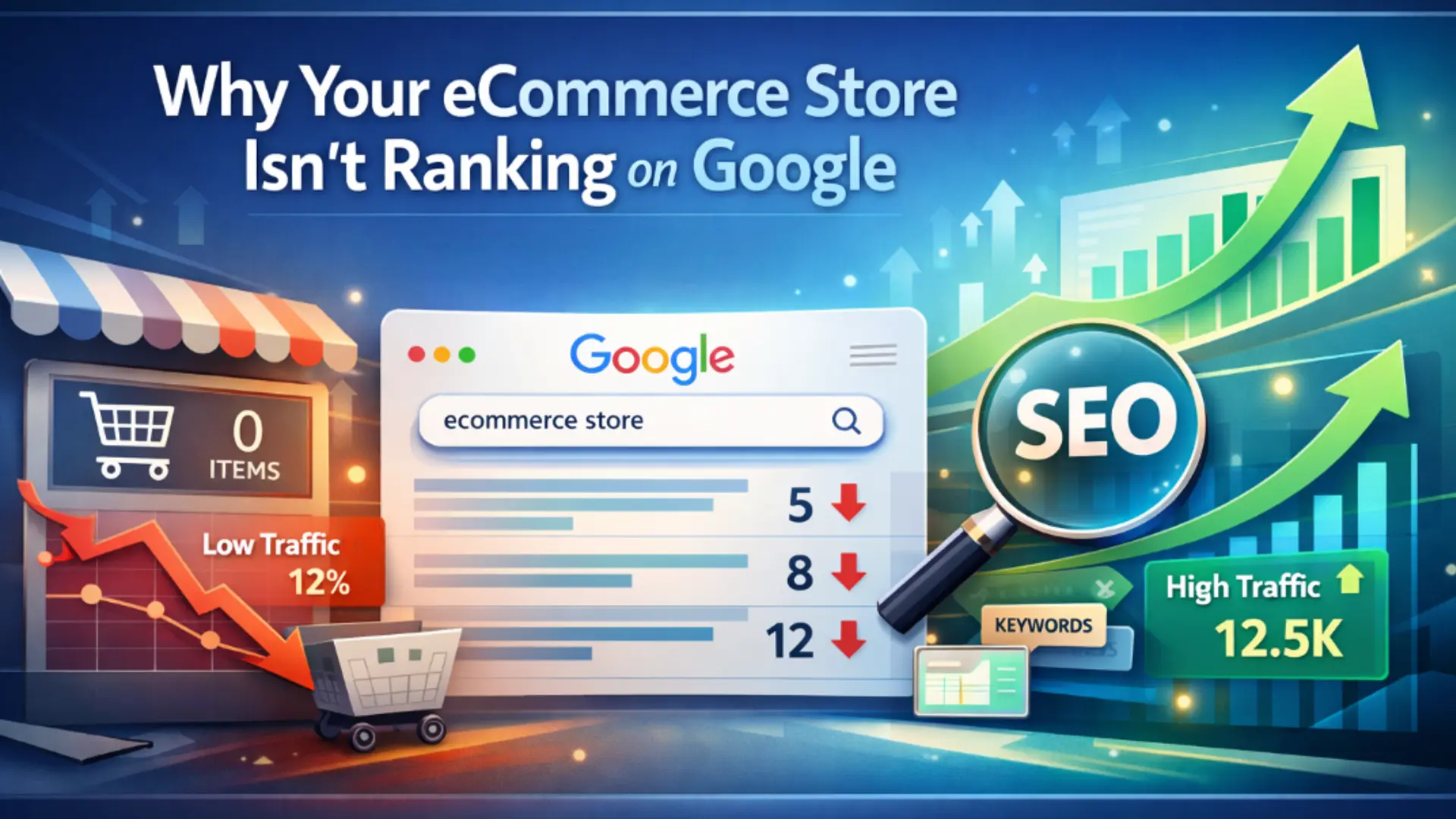
Why Your eCommerce Store Isn't Ranking on Google And How We Fix It

Why Your eCommerce Store Isn’t Ranking on Google And How We Fix It

You launched your store with real excitement. Your products are solid. Your ads bring visitors—until you turn them off and the traffic disappears. But when you search Google for what you sell? You’re nowhere. Your competitors show up. You don’t.

If your eCommerce store isn’t ranking on Google, you’re not alone. Thousands of online store owners face this exact problem every single day. You’ve probably asked yourself: “Why isn’t my online store visible in search results?” or “Is something fundamentally broken with my SEO?” Maybe you’ve even wondered if Google just doesn’t like eCommerce stores.

Here’s what we can tell you after 20+ years at Oriental Outsourcing auditing hundreds of eCommerce websites: it’s not Google’s fault, and it’s probably not your fault either. When an eCommerce store isn’t ranking on Google, it’s usually because of the same structural SEO problems that make ranking nearly impossible—no matter how good the products are.

This isn’t another generic SEO checklist. This is how we at Oriental Outsourcing actually diagnose why stores don’t rank, what’s stopping Google from finding and trusting your pages, and what it takes to fix it. If you’ve been stuck in paid-ads-only mode and wondering why organic traffic never shows up, this will help you understand exactly what’s going wrong.

The Real Reasons Your eCommerce Store Isn't Ranking on Google

Google doesn’t rank stores—it ranks individual pages. When an eCommerce site isn’t ranking, it’s because its pages don’t give Google a clear reason to show them.

Most stores are built to sell, not to rank. Product pages are thin or repetitive, category pages lack real content, and filters create thousands of unnecessary URLs. Everything looks fine to users, but to Google, the structure is confusing.

This is what we see in nearly every audit at Oriental Outsourcing. Store owners think they have many rankable pages, but most are too weak or poorly structured to perform.

The site works for paid traffic—but it isn’t built for organic search. That’s the core reason many eCommerce stores don’t get Google traffic.

Common SEO Mistakes Killing eCommerce Rankings

Let’s talk about the specific mistakes that show up again and again in our audits. These aren’t small issues. They’re the difference between ranking and being invisible.

Targeting the Wrong Keywords

Most stores optimize for the wrong search terms without realizing it. You’re ranking for your product SKU codes or brand-specific terms that nobody searches for. Meanwhile, the actual keywords your customers use—the category-level terms, the problem-solution phrases, the buying intent queries—those go to your competitors.

If you sell “organic cotton baby blankets,” but your pages only mention your product name “CloudSoft Blanket Model CB-405,” you’re missing everyone searching for what you actually sell. This is a primary reason why many eCommerce stores struggle to rank on Google.

Duplicate Content Across Products

When you have 50 products in the same category, it’s tempting to reuse descriptions. Change the color, swap the size, copy the same features. Google sees this as 50 nearly identical pages competing against each other. Or worse, you’re using the manufacturer’s description—the exact same text that’s on 100 other websites selling the same product.

No Clear SEO Structure

Your URLs look random. Products aren’t connected to their categories in any meaningful way. There’s no internal linking strategy, so Google can’t understand what’s important on your site or how your pages relate to each other. Everything’s just floating independently, fighting for attention.

Relying Only on Paid Ads

Here’s the truth about ads: they work until you stop paying. Ads bring traffic, but they don’t build authority. They don’t teach Google what you sell or why your site deserves to rank. When your ad budget runs out or gets too expensive, you’re back to zero traffic. SEO builds a foundation that keeps working whether you’re spending money or not.

Why Product Pages Don't Rank (Even If Your Products Are Great)

Many store owners ask, “My products are better—so why don’t my pages rank?”
Because Google doesn’t rank products. It ranks helpful pages.

Searchers want answers, comparisons, and context—not just a short description and an “Add to Cart” button. Most product pages are thin, lack FAQs, trust signals, and internal links, and don’t clearly explain who the product is for or why it’s better than alternatives.

As a result, Google doesn’t see these pages as important.

At Oriental Outsourcing, we enhance product pages with the content and structure needed to match real search intent—turning thin pages into pages that deserve to rank.

Category Pages – The #1 Missed SEO Opportunity in eCommerce

If there’s one SEO tip that can transform your results, it’s this: optimize your category pages.

Most stores treat them as simple product grids, but well-optimized category pages drive 60–70% of organic revenue. Google loves them because they match search intent—shoppers want options and context, not a single product.

To rank, category pages need real content: intros, buying guides, FAQs, and helpful context. Internal linking from the homepage, related categories, and blogs signals importance to Google.

Also, watch out for filter URLs—they create crawl issues. Done right, your category pages become SEO powerhouses without breaking your site.

The Local SEO Factor Most eCommerce Stores Ignore

Many eCommerce store owners overlook local SEO, but it can be a powerful growth lever. If you serve specific regions, offer local pickup, or same-day delivery, local optimization helps you appear in location-based searches.

Local SEO improves visibility through Google Business Profiles, local citations, and location-focused content—driving highly qualified, ready-to-buy traffic.

At Oriental Outsourcing, we help eCommerce brands use local SEO alongside broader SEO strategies to gain an edge over competitors focused only on national keywords.

Technical SEO Issues We Consistently Find in eCommerce Audits

Many eCommerce ranking problems are invisible but critical to Google. Issues like index bloat, faceted navigation, slow page speed, mobile inconsistencies, and JavaScript rendering often prevent stores from ranking—without owners realizing it.

Google wastes crawl budget on unnecessary URLs, struggles to understand your content, and sees poor user experience signals. The result? Weak or no rankings.

At Oriental Outsourcing, we audit and fix these technical issues first because they form the foundation of every successful eCommerce SEO strategy.

How Oriental Outsourcing Fixes These Problems

When we take on an eCommerce store with low organic visibility, we start with a real SEO audit—not an automated score. Our team reviews site structure, analyzes how Google sees your store, and identifies the exact issues blocking rankings.

Next is keyword mapping. Each page has a clear role: product pages target product terms, category pages target broader keywords, and blogs support informational searches—no overlap, no confusion.

Then we optimize content and internal linking to match search intent, improve thin pages, and clearly signal what matters most to Google.

We also handle technical cleanup, fixing crawl issues, index bloat, speed, and mobile problems—often the fastest wins.

Finally, we focus on ongoing optimization. SEO isn’t one-time work. We monitor performance, adapt to changes, and provide clear reporting so you always know what’s driving results.

When You Should Consider Hiring an eCommerce SEO Agency

SEO agencies aren’t for every store. If you just launched, you might not need help yet. But if your store has been live 6–12 months, organic traffic is near zero, ads are costly, multiple categories aren’t ranking, or you’re in a competitive or international market, professional eCommerce SEO is worth it.

Unlike ads, SEO builds lasting results—today’s work keeps driving traffic months from now, creating a true asset instead of rented traffic.

Partner with Oriental Outsourcing for Results-Driven eCommerce SEO

Most eCommerce stores don’t rank on Google because they weren’t built with SEO in mind. The issues usually stem from site structure, technical errors, and content that doesn’t match real search intent—but they are fixable.

At Oriental Outsourcing, we help eCommerce brands identify and resolve these root problems, turning low visibility into consistent, profitable organic traffic.

If your store isn’t ranking, a professional eCommerce SEO audit is the first step. We show exactly what’s holding your site back and what to fix first—no guesswork.

Ready to reduce ad dependency and grow sustainable organic traffic? Contact us today and see why eCommerce businesses trust Oriental Outsourcing.

Frequently Asked Questions About eCommerce SEO

1. How long does it take for an eCommerce store to rank on Google?

Most eCommerce stores see early improvements in 3–4 months, while strong rankings usually take 6–12 months. The timeline depends on competition, technical SEO issues, and site size. Quick gains often come from fixing technical problems, but long-term traffic growth requires ongoing optimization. SEO takes time—but once rankings improve, traffic continues without paying for every click.

You can manage basic SEO if your store is small and new. However, most established eCommerce stores struggle due to technical and structural SEO issues that aren’t easy to spot. If you’ve tried SEO for months with little progress or rely heavily on ads, working with an experienced SEO agency usually delivers better and faster results.

Google doesn’t rank based on product quality—it ranks pages based on search intent and optimization. Competitors often win because their pages are better structured, target the right keywords, load faster, and provide clearer information. Strong products need strong SEO to compete.

Yes. Ads stop the moment you stop paying, while SEO builds long-term, compounding traffic. Many eCommerce stores use ads for short-term results and SEO for sustainable growth. Over time, SEO can reduce ad dependency and improve overall profitability.

The biggest mistake is ignoring category page SEO. Category pages match buyer search intent better than individual products, yet many stores don’t optimize them. Well-optimized category pages often drive the majority of organic revenue and deliver the fastest SEO returns.
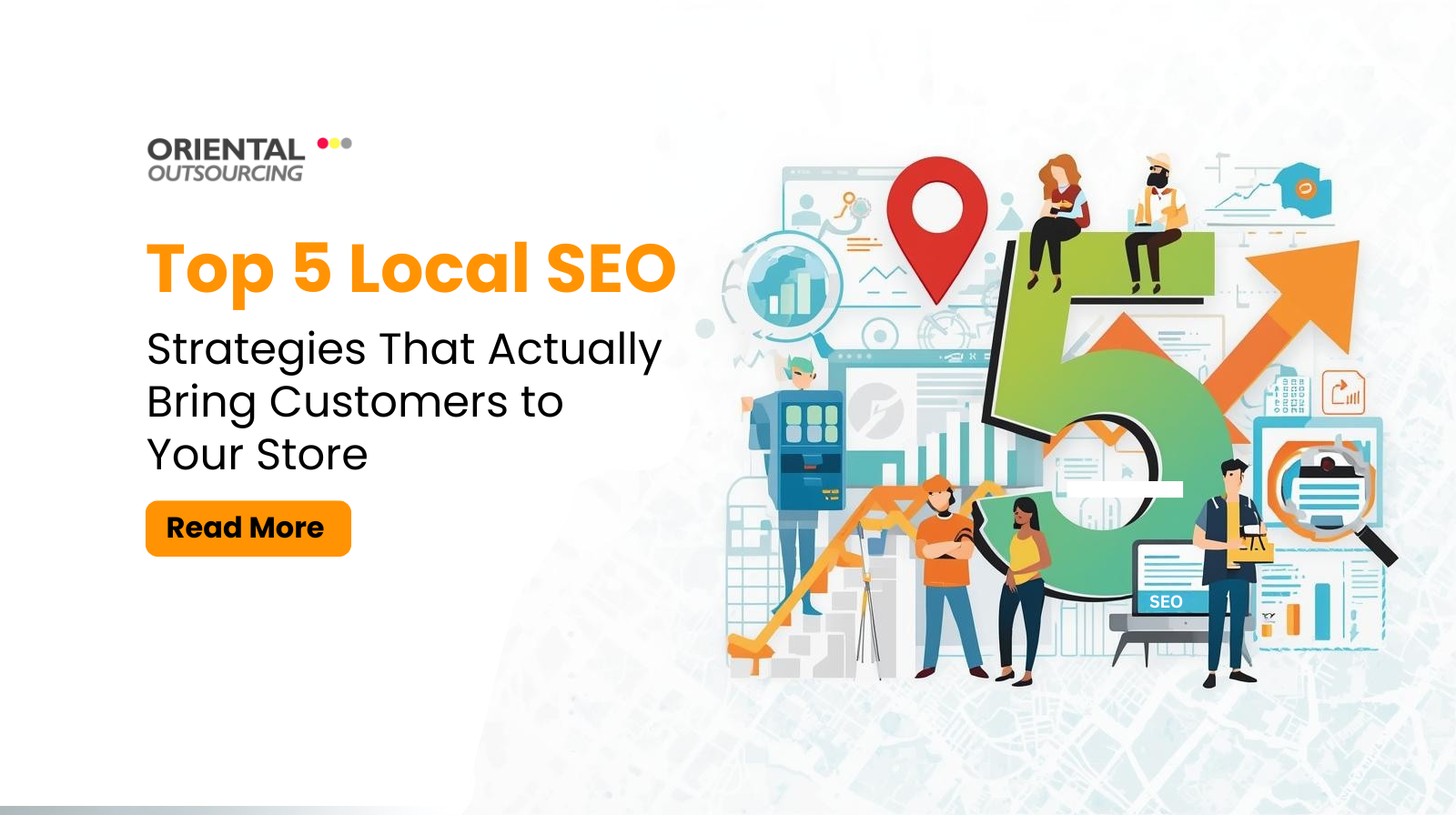
Top 5 Local SEO Strategies That Actually Bring Customers to Your Store

If you’re a local business owner, you’ve probably wondered why customers aren’t finding your store on Google. You have a great product, excellent service, and maybe even a website—but somehow, you’re invisible online. Here’s the truth: local SEO strategies can change everything. When done right, local SEO strategies help nearby customers discover your business exactly when they’re ready to buy through local search engine optimization.

The numbers don’t lie. Nearly half of all Google searches have local intent, meaning people are actively looking for businesses like yours in their area. Whether you run a coffee shop, dental clinic, or retail store, showing up in local search results is no longer optional—it’s essential for survival.

In this guide, I’ll walk you through five proven local SEO strategies that actually work. No fancy jargon, no complicated tech talk. Just straightforward tactics you can implement today to get more customers walking through your door.

Why Local SEO Strategies Matter for Your Business

Before we dive into the strategies, let’s talk about why this matters. When someone searches “coffee shop near me” or “best plumber in Chicago,” Google decides which businesses to show based on three main factors: relevance, distance, and prominence.

Your job is to prove to Google that your business deserves that top spot. The good news? You don’t need a massive budget or a tech degree to make it happen. You just need to follow the right local SEO strategies consistently.

Strategy 1: Optimize Your Google Business Profile

Google Business Profile for local SEO strategies

Your Google Business Profile is hands-down the most powerful tool for local SEO. Think of it as your digital storefront—it’s often the first thing potential customers see when they search for businesses like yours.

Here’s what most business owners get wrong: they claim their listing and forget about it. That’s like opening a store and never turning on the lights. Your Google Business Profile needs regular attention and optimization to stand out.

How to Optimize Your Profile Properly

Start by ensuring all your basic information is accurate and complete. Your business name, address, and phone number must match exactly everywhere online—even small differences can confuse Google and hurt your rankings.

Choose the right business categories. Your primary category should reflect your main service, with secondary categories for additional offerings. For example, a restaurant might list “Italian Restaurant” as primary and “Pizza Delivery” as secondary.

Use your 750-character business description wisely. Write naturally for humans while including your services and location: “We’re a family-owned Italian restaurant in downtown Boston, serving authentic pasta and wood-fired pizza since 2010.”

Add high-quality photos of your storefront, interior, products, team, and customers. Businesses with photos get 42% more direction requests and 35% more website clicks. Update them regularly to signal activity to Google.

Keep Your Profile Active

Post regular updates about special offers, events, or new products. Respond to every review—both positive and negative—within 24-48 hours. This shows potential customers you care and tells Google your business is engaged. Enable messaging so customers can contact you directly, and answer questions promptly to build trust and improve your local search visibility.

Strategy 2: Master Local Keywords and Create Location Pages

Keywords are the bridge between what people search for and what you offer. But local SEO keywords work differently than regular SEO.

When someone searches for “plumber,” they could be anywhere. When they search for “emergency plumber in Brooklyn,” they’re ready to hire someone now. That “in Brooklyn” part is gold for local businesses.

Finding the Right Local Keywords

Think about how your customers actually talk. They don’t say “automotive repair services”—they say “car mechanic near me” or “oil change in Austin.” Use tools like Google’s autocomplete to see what real people search for. Just type your service plus your city and watch the suggestions appear.

Your local keywords should include:

  • Your service plus city name (“dentist in Miami”)
  • “Near me” variations (“pizza near me”)
  • Neighborhood names (“hair salon in SoHo”)
  • Service plus “near” location (“dog grooming near Central Park”)

Using Keywords the Right Way

Once you have your keywords, sprinkle them naturally throughout your website. Put them in your page titles, headings, and the first paragraph of your main pages. But don’t stuff them everywhere—Google’s smart enough to spot that and it reads as desperate.

Your homepage should target your main service and city. Then, if you serve multiple locations, create separate pages for each area. Each location page should have unique content about that specific area—mention local landmarks, address area-specific needs, and include real testimonials from customers in that neighborhood.

Add a Google Map to every location page. Include your full address, phone number, and hours. Make it easy for customers to find you both online and in person.

Strategy 3: Build Your Reputation with Customer Reviews

Reviews are the lifeblood of local SEO. They influence both your Google rankings and whether customers choose you over competitors. Google cares about review quantity, quality, and recency—you need a steady stream of fresh reviews to stay competitive.

Getting More Reviews (The Right Way)

Ask for reviews right after delivering great service when customers are happiest. Make it easy by sending a direct link to your Google review page via email or text.

Try this simple script: “We’re so glad you’re happy with our service! Would you mind taking a minute to share your experience on Google? It really helps other customers find us.”

Responding to Reviews

Every review deserves a response. Thank positive reviewers by name and mention something specific about their experience.

For negative reviews, stay professional and empathetic. Apologize, take responsibility, and offer to make it right offline. Never argue publicly—potential customers are watching how you handle criticism.

Display your best reviews on your website too. This builds trust and makes review management one of the most effective local SEO strategies you can implement.

Strategy 4: Build Consistent Local Citations

Citations are mentions of your business name, address, and phone number on other websites. Every time your business appears on a directory, review site, or local website with consistent information, it strengthens your local SEO.

Think of citations as votes of confidence. When Google sees your business listed consistently across the web, it trusts that you’re a legitimate, established business.

Where to Build Citations

Start with the major platforms everyone knows: Google Business Profile, Bing Places, Yelp, Facebook, and Apple Maps. Make sure your information is identical on all of them.

Then move to industry-specific directories. Restaurants should be on OpenTable and TripAdvisor. Doctors should be on Healthgrades and Zocdoc. Lawyers should be on Avvo and FindLaw. You get the idea.

Don’t forget local directories. Your city’s chamber of commerce, local business associations, and community websites are valuable. They carry extra weight because they’re specific to your area.

The NAP Consistency Rule

This is critical: your name, address, and phone number must be exactly the same everywhere. Not almost the same—exactly the same.

If your Google profile says “123 Main Street,” don’t write “123 Main St.” somewhere else. If you use “(555) 123-4567” one place, use that format everywhere. Even small differences confuse Google and dilute your SEO power.

Audit your existing citations regularly. Search for your business name online and check every listing you find. Fix any inconsistencies immediately.

Strategy 5: Make Your Website Mobile-Friendly and Fast

Most local searches happen on mobile devices. Someone’s walking down the street, pulls out their phone, and searches for “coffee shop near me.” If your website takes forever to load or looks terrible on mobile, you’ve already lost them.

Google knows this. That’s why mobile-friendliness and page speed directly impact your local rankings.

Optimizing for Mobile Users

Your website needs to work perfectly on phones and tablets. Text should be readable without zooming. Buttons should be easy to tap with a thumb. Navigation should be simple and intuitive.

Test your site on different devices. Better yet, ask friends to try it. If they struggle to find your phone number or address, you’ve got work to do.

Make your contact information prominent. Put your phone number at the top of every page as a clickable link. Add a “Get Directions” button that opens Google Maps. The goal is to remove every possible barrier between someone finding you online and contacting you.

Speed Matters More Than You Think

A one-second delay in page load time can reduce conversions by 7%. People are impatient, especially on mobile. If your site doesn’t load fast, they’ll hit the back button and try your competitor instead.

Check your site speed using Google PageSpeed Insights. It’ll show you exactly what’s slowing you down and how to fix it. Common culprits include large images, too many plugins, and slow hosting.

Compress your images before uploading them. Use a caching plugin if you’re on WordPress. Consider upgrading your hosting if you’re on a cheap shared plan. Speed is worth investing in.

How Oriental Outsourcing Builds Local SEO Strategies That Bring Real Customers

Understanding local SEO is one thing. However, consistently ranking in Google Maps and attracting nearby customers requires a strategic and ongoing approach.

At Oriental Outsourcing, we create data-driven local SEO strategies that improve Google Business Profile visibility, strengthen reviews, fix citation inconsistencies, and optimize websites for mobile conversions.

Our focus isn’t just rankings — it’s helping businesses generate more calls, visits, and real customers through sustainable local growth.

Start Taking Action Today

Local SEO isn’t about perfection—it’s about consistency. Start with one strategy that feels manageable. Maybe optimize your Google Business Profile today, then ask three happy customers for reviews tomorrow. Build momentum from there.

Your competitors are probably ignoring most of this, and that’s your opportunity. While they wonder why customers aren’t finding them, you’ll be building steady local traffic that grows every month.

The customers are already searching for what you offer. These five strategies from Oriental Outsourcing help ensure they find you first. Stay consistent, and watch your local visibility grow.

Frequently Asked Questions

How long does it take to see results from local SEO?

Most businesses implementing local SEO strategies start seeing improvements within 4-8 weeks, but significant results typically take 3-6 months. Local SEO is a marathon, not a sprint. The key is staying consistent with your efforts—optimizing your profile, collecting reviews, and building citations regularly.

Yes, responding to reviews shows both Google and potential customers that you’re engaged and care about feedback. It takes just a few minutes but makes a big difference in how people perceive your business. Even a simple “Thanks for your review!” is better than silence.

There’s no magic number, but aim for at least 10-20 quality reviews to start. More importantly, focus on getting new reviews consistently—a business with 30 recent reviews often outranks one with 100 old reviews. Fresh reviews signal that you’re actively serving customers.

You can absolutely do the basics yourself—claiming your Google profile, asking for reviews, and ensuring consistent business information. These foundational steps cost nothing but time. However, if you’re struggling with technical aspects or want faster results, hiring an expert can be worth the investment.

The biggest mistake is inconsistent business information across the web. When your name, address, or phone number differs even slightly across directories, it confuses Google and weakens your rankings. Spend time auditing and fixing these inconsistencies—it’s one of the quickest wins in local SEO.